| PROPERTY |
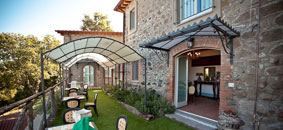 |
The Specchio del Lago country house is directly on Lake Bolsena and it still retains its original structure dating back to the 1600’s. a place full of charm and history perfect to take a nice break from the daily monotony of life.

|
| |
| ACCOMMODATIONS |
 |
|
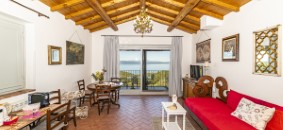
The Specchio del Lago country house offers charming accommodations furnished to the smallest detail. All the apartments and all the rooms give you a breathtaking view overlooking the lake, each one different than the other.
|
| |
| SURROUNDINGS |
 |
|
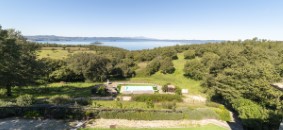
Specchio del Lago country house is the perfect place for a relaxing holiday exploring the territory of Tuscia. It is at the start of Montefiascone and is an ideal base for visiting the nearby towns of Bolsena, Orvieto, Bomarzo, Tarquinia, Tuscania, Viterbo.
|
| |
| |
Tours and Excursions in Tuscia
The territory of Tuscia is the richest of Central Italy in terms of natural beauty, history and culture. Firstly it was the Ancient Etruscan land and then the territory of the Papal States. Tuscia, close to the border with Lazio, Tuscany is certainly the ideal place for your holidays.
Whether you love a holiday of pure relax, or whether you love history and culture of a place or even an active sportive holiday, Tuscia is the place for you.
Bolsena Lake
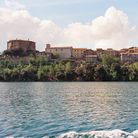
Bolsena Lake is the largest volcanic lake in Europe. With its low and sandy coasts, it is particularly popular in the summer and not only for its beaches but for water sports, such as swimming, canoeing, windsurfing, and fishing.
Many paths around Lake Bolsena allow you to take long nature walks, horse riding and cycling.
Every year, from early spring until late September villages overlooking the lake come alive with numerous fairs and festivals with the offering of local products and the presence of music and every other kind of entertainment.
|
|
 |
|
Montefiascone
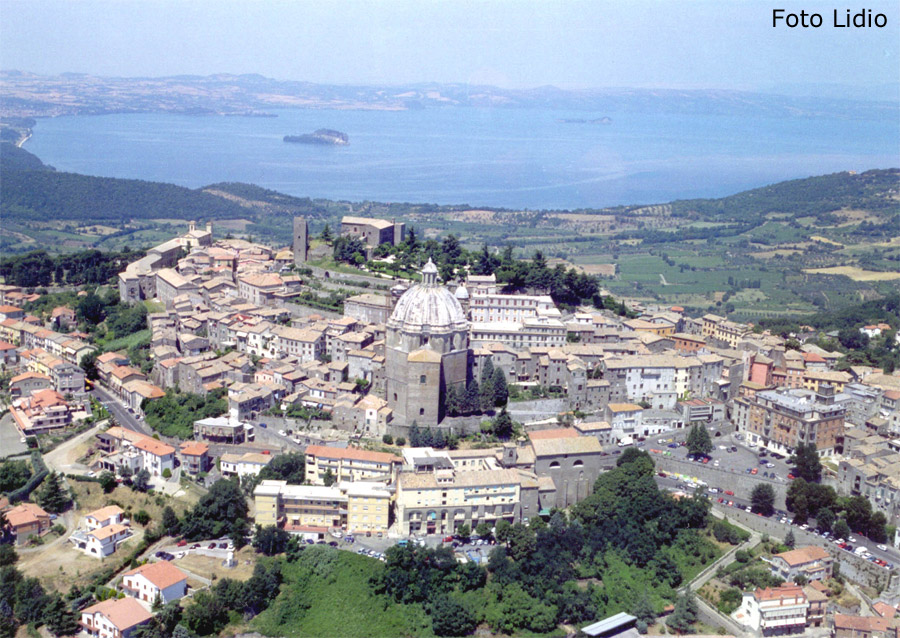
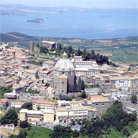
Also known as the "Pearl of Lazio" Montefiascone is above the volcanic crater of Bolsena Lake.
This privileged location allows you to enjoy the magnificent landscape not only of the whole lake, but also Viterbo, Monti Cimini and those of Umbria and on clear days you can even see the Tyrrhenian Sea.
In addition to the gastronomic traditions and the local wine (the famous "Est! Est! Est! "), Montefiascone is definitely worth a visit for its beautiful monuments that have witnessed many historical events.
This strategic area which had been disputed between Empire and Papacy since the year one thousand, Montefiascone passed under the Barbarossa rule, and then under Church (XIV c.), who restored the existing Fortress (built in the XIII century) military control of the territory.
In the following centuries, the castle became the residence place of several popes and celebrities, witnessing the growing splendor of the town, which reached its climax towards the end of 1600 with Cardinal Barbarigo.
Today, after several centuries of neglect the castle - also known as Rocca dei Papi - has been completely restored and returned to its citizens. In addition to being a popular tourist destination, the castle is in fact home of many cultural events, which the most famous is East Film Festival, a film festival during the summer between the months of July and August.
The city of Montefiascone owes much to Cardinal Barbarigo. He took office at the end of 600, he engaged in first person for development of the city, not only from a religious point of view but also economically and it was him that started the Montefiascone seminar expansion which became famous internationally, and received important historical figures.
The seminar was also equipped with its own printing press and a rich collection of manuscripts and these prints of the period between 1600-1700 are still of great importance today.
You have to visit the Church of San Flaviano – which is in Lombard Romanesque style and was built in XI century, here lies the remains of St. Flaviano Martyr and Bishop Johannes German Defuk - known for his love of the local wine "Est! Est! ! Est! "- the cathedral of Santa Margherita, the second most important dome in Italy which is best known for its architectural elements of the territory along the fortress and it’s symbol of the city. Here are preserved the relics of the saint. The Church of St. Mary Montedoro (located close to our farm Specchio del Lago) was constructed by Antonio da Sangallo under the Pope Leone X orders and it’s recognizable by its distinctive octagonal base.
|
|
 |
|
Via Francigena
Via Francigena is a path that in the Middle Ages led to the three most important destinations in Christian antiquity: Santiago de Compostela, Rome and Jerusalem.
The pilgrimage along the path Via Francigena was done strictly on foot for a distance of about twenty kilometers per day and was a proof of devotion by pilgrims to the Holy Land and other places of Christendom. Not only used for religion, it should not be overlooked that Via Francigena was indeed a very privileged route which was used for trade and commerce.
In the Viterbo province, Via Francigena was the important link from Tuscany to the capital. The most important stops along the way were the following ten: Proceno, Acquapendente, Bolsena, Montefiascone, Viterbo, Ronciglione (or San Martino al Cimino), Vetralla, Capranica, Sutri and Monterosi.
The stretch of Via Francigena from Bolsena to Montefiascone is used even today. It is a path that leads from Basilica of Santa Cristina in Bolsena (known for the miracle of Corpus Christi) to Rocca dei Papi in Montefiascone, for a total of about 18 km.
The main part of the path goes through olive groves, hills and woods and goes over some parts of the ancient Via Cassia, with wonderful views of the lake.
Upon arrival at the fortress Popes of Montefiascone you are greeted by a great 360 degrees view from the Tower of the Pilgrims: here you can see the gentle waters of Lake Bolsena, greeted with a beautiful picturesque landscape of the numerous villages, this repays the pilgrim after much fatigue and tiredness.
|
|
|
|
Viterbo
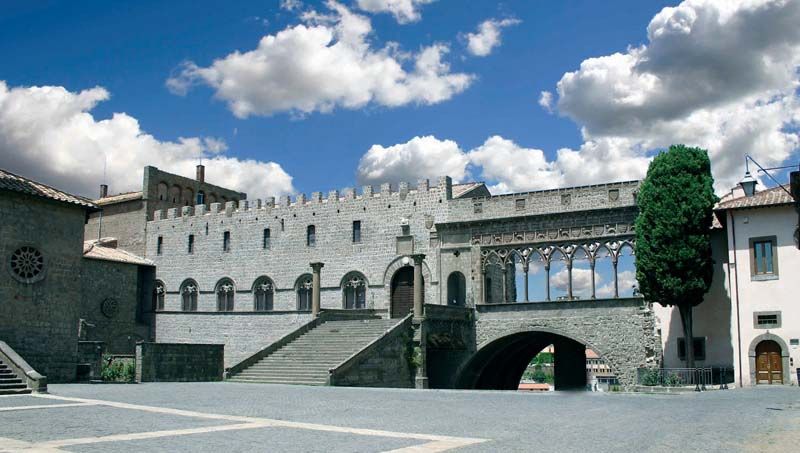
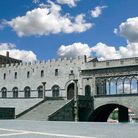
Your holiday on Lake Bolsena must include a visit to Viterbo, known for its beautiful medieval town perfectly preserved (film set of famous films), and for the event San Pellegrino in fiore (in May), for the Festival of Saint .Rosa with the transport of the "Macchina" (3 - 4 September), to the nearby Ferento (archaeological site of great importance with an Etruscan, Roman and Medieval past) and its splendid Roman amphitheater, which is the location of the election season theater and opera during the summer).
Important attraction in Viterbo are the hot natural spring waters, known since antiquity.
The thermal baths of Viterbo - a private spa with pools of sulphurous water which are visited each year by hundreds and thousands of people who seek care in these waters and relief from various types of problems.
The waters of the "Bullicame", known since antiquity, were cited by the poet Dante in Divine Comedy:
« Tacendo divenimmo la 've spiccia fuor della selva
un picciol fiumicello, lo cui rossore ancor mi raccapriccia. Quale del
Bullicame esce ruscello che parton poi tra lor le peccatrici, tal per
la rena giù sen giva quello. Lo fondo suo ed ambo le pendici
fatt'era 'n pietra, e margini dallato »
(Dante, Inferno - canto XIV) |
|
 |
|
Villa Lante
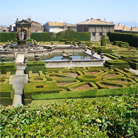
Villa Lante in Bagnaia (fraction of Viterbo) is one of the best examples of Italian gardens in 1500, this is why it was elected in 2011, "the most beautiful park in Italy."
The Villa and its gardens were taken by Cardinal Gianfrancesco Gambara. One century later it took the name of "Villa Lante", when the complex became part of the territory of Bomarzo and belonged to the family Lante Montefeltro della Rovere.
Villa Lante contains two lodges, made thirty years after each other, by two different owners: the first owner, Cardinal Gambara and then Cardinal Peretti.
While certainly it deserves a visit, the lodges are nothing compared to the wonderful gardens, with fountains, water features, small caves, sculptures and green mazes, designed not "in support of the Villa" but as an integral part.
It's hard to decide which of the architectural elements present in the Gardens of Villa Lante is worth more attention, from the complex Moorish fountain parterre to the great trees, from terraced gardens to the labyrinth, the theater of water (a combination of fountains, grottos and two lodges) the statues of the river gods. To describe in words Villa Lante is not easy, and any narration ever made was never enough to give the justice deserved to the wonder that evokes a personal visit to the Villa.
|
|
|
|
Civita di Bagnoregio
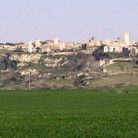
Also known as "the dying city" because of its geography, Civita di Bagnoregio is one of the most well known centers in the Viterbo province.
The town stands on a hill that over the centuries has been eroded by the weather until it was completely isolated, except for a pedestrian bridge that had to be built in the sixties.
Soil erosion on which the dying city stands is surely caused by the weather. This weather phenomenon is the same one that created the small valleys which are typical of the area and this has led to the abandonment of the entire city and today they are no more than a dozen people living there.
|
|
 |
|
Vulci
Vulci is located in the province of Viterbo, close to Montalto di Castro. Vulci is known to have been an ancient Etruscan town, the largest and most prosperous of Etruria, characterized by a strong seafaring and important trade with Orient and Greece, thanks to the natural corridor of the river Fiora which from Vulci leads to the sea. The most famous monuments of Vulci are certainly the necropolis, located just outside the territory of the town, with hundreds of graves. The most famous tombs are those of Cuccumella, the Rotunda, and the tomb of François. François’s tomb is located in the territory of Canino, where there is also Vulci Castle (Castle of Abbadia), where there is a museum of great archaeological interest and also the famous Mitreo. The 30 meters high Devil's Bridge from the third century B.C. overlooks the River Fiora and it is a wonderful connection between the area of Vulci Castle and the area of the necropolis.
|
|
 |
|
Tuscania
Close to Montefiascone, the town of Tuscania overlooks the valley of River Marta, which was an ancient way of communication between Lake Bolsena and the Tyrrhenian Sea.
Tuscania is a town full of charm and history, particularly the mythological legends on how the city was founded which have been passed on from generation to generation.
According to some historians of antiquity, Tuscania was founded by the son of Aeneas, Ascanio. Legend has it that the name Tuscania comes from him that had discovered twelve puppies (hence the Latin name Tus-cana), a second legend says that the foundation of Tuscania was actually by Tusco, the son of ercole and Araxe.
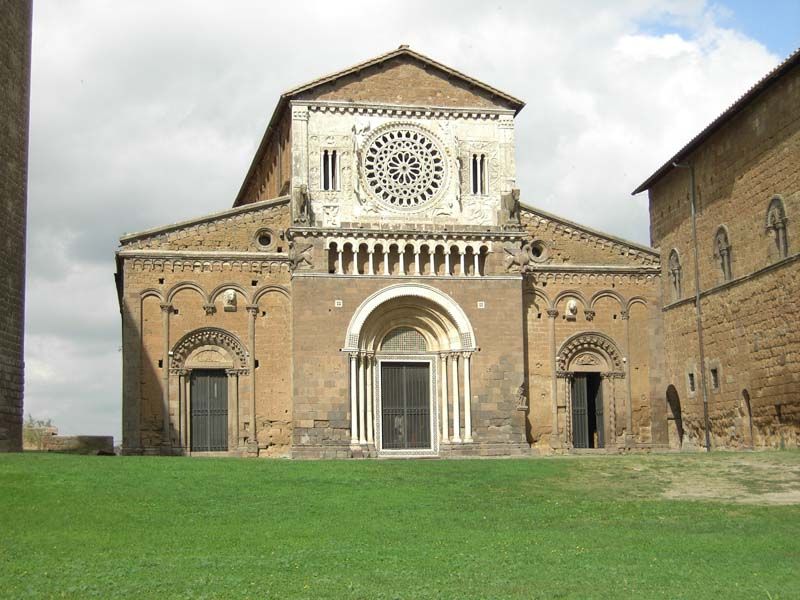
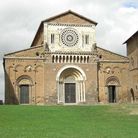
Among the most beautiful monuments of Tuscania we must certainly mention the two Churches, that of S. Peter, dating from the seventh century, in the Lombard Romanesque style that dominates the hill overlooking the city, and the Church of S. Maria Maggiore, dating from the eighth century. The first is characterized by a majestic interior which has three naves and a wonderful crypt, the second is known for its fourteenth-century fresco of the "Last Judgement".
Finally we suggest you take a walk through the narrow streets of the village up to the gardens of the Tower del Lavello from which you can enjoy a splendid view of these great medieval churches and the Fountain Seven canelle.
|
|
 |
|
Tarquinia
The city of Tarquinia was built in the Etruscan period and is one of the most important centers of the twelve Etruscans.
Its history is closely linked with that of Rome, to which three kings of Rome were actually from Tarquinia: Tarquinio Prisco, Servio Tullio and Tarquinio il Superbo.
Today, the city still has many treasures which can be visited at the National Etruscan Museum, like the many vases, sarcophagi and funerary objects which were found in the nearby necropolis.
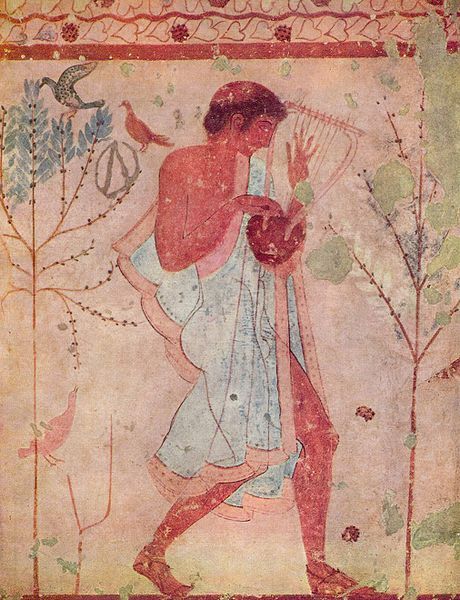
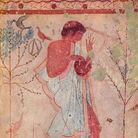
Among these necropolis, the necropolis of Monterozzi is certainly the most important: here there many tombs were found, among which the most important are: the Tomb of the Giocolieri (jugglers), the Tomb of the Leopardi (leopard), the Tomb of the Leonesse (lioness), the Tomb of Caccia (hunting) and Pesca (fishing), Tomb of the Gorgoneion. The tombs take these curious names from the examples of the Etruscan painting that were discovered.
In addition to the Necropolis, the Church of Santa Maria di Castello, in Romanesque style (XI cent.), The Church of Santa Maria Valverde (XIII cent.) with its precious Byzantine Madonna are worth a visit.
Finally, in the summer months, Tarquinia is known for its beaches which are part of the Etruscan Riviera. These beaches extends to the province of Livorno, where it is full of entertainment venues and services.
|
|
 |
|
Bomarzo
Al confine tra Lazio e Umbria, la cittadina di Bomarzo è
conosciuta per due particolari luoghi di interesse, il Parco dei Mostri
e Palazzo Orsini.
On the border between Lazio and Umbria, the town of Bomarzo is known for two particular attractions, the Park of Monsters and Palazzo Orsini.
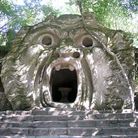
The park of Bomarzo is a large garden monument built by the Orsini family in the sixteenth century grotesque style, it is full of strange mythological architectures particulars and very large stone animals.
Palazzo Orsini, however, always going back to the sixteenth century, dominates the town of Bomarzo, it consists of several structures built at different times.
The building was originally of the Orsini, which was acquired by the Borghese family in 1836. The beautiful hall was painted by the painters from the school of Pietro da Cortona, and it is now used as the town hall.
|
|
 |
|
Caprarola
The town is located on a tuff spur on the south side of Monti Cimini. Not only known for its closeness to Lake Vico, Caprarola is also known for the production of hazelnuts and chestnuts, and for its splendid Palazzo Farnese.
Caprarola was brought to its peak in the sixteenth century by the Farnese family. Alessandro Farnese gained great importance when he was elected as Pope of Cardinal (with the name of Paul III) he was then able to build numerous castles and villas as a symbol to his noble power.
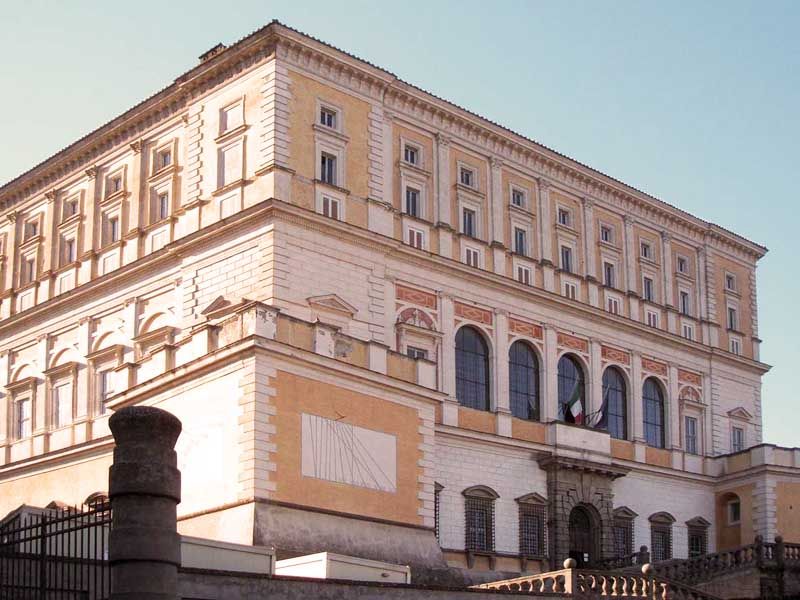
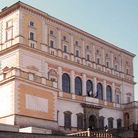
Palazzo Farnese, in particular, is one of the finest examples of Renaissance architecture. With its unique pentagonal the palace is visited every year by thousands of tourists who visit the beautiful rooms, admire the paintings and enjoy walking in the "Farnese gardens": the late Renaissance garden is attached to the building and is filled with fountains, water games , trees and statues.
|
|
 |
| |
|
|
Book now your holiday on Lake Bolsena, and come and see the wonders of Tuscia in person!
| |